
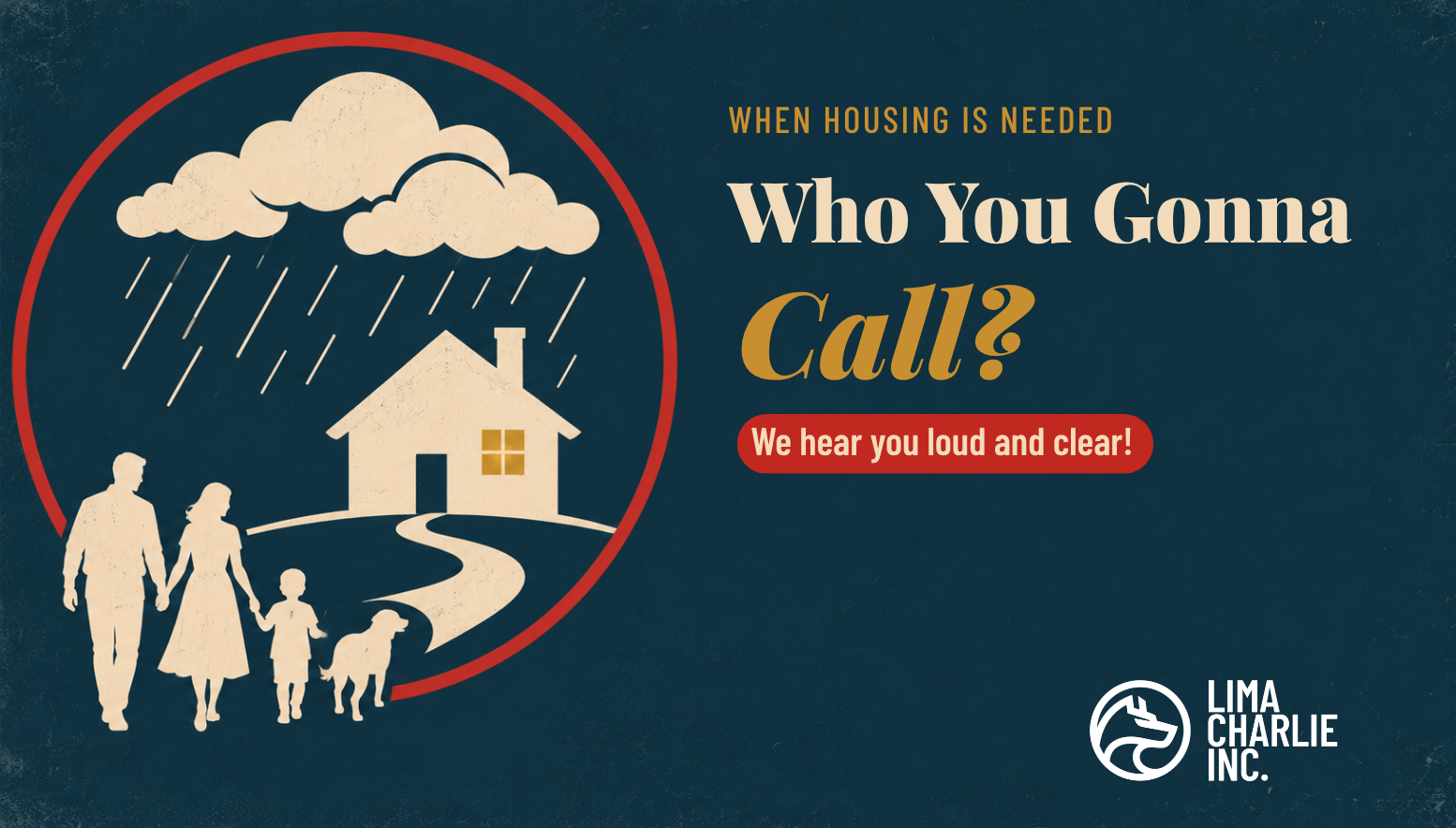
Halloween is a good day to talk about what actually keeps emergency managers up at night: the phone call that goes to voicemail. FEMA’s list shows six emergency declarations between October 9 and October 26, covering Florida, Alabama, Georgia, Guam, the Northern Mariana Islands, and New Mexico. Every one of those responses began with someone asking who could give people a safe place to sleep, and how fast. If you are asking that for the first time during a storm, you are calling a disaster housing vendor you have never tested. Here are five ghosts worth hunting down before you sign anything.
Five ghosts that haunt every disaster housing vendor list

First, the ghost inventory. A vendor list with impressive names and no available units is the most common haunting. Ask for unit counts by county, whether those units are furnished, and when they were last verified. Then run a test inquiry on a real date range and see how long the answer takes.
Second, the zombie contract. An agreement that was signed and never activated looks fine until the day you need it. Read the activation terms. Who can trigger it, how quickly must the provider respond, and what happens if they cannot?
Third, the voicemail void. Any provider can promise 24/7 support on a slide. Call the number at two in the morning and find out. A live person should answer, and if a short menu comes first, it should lead to a human quickly.
Fourth, the phantom track record. Ask for declaration numbers and household counts, not adjectives. Lima Charlie publishes ours: 793 households and 724 ready-for-occupancy units for the Maui wildfires (DR-4724-HI), 461 households after Hurricane Ian in Florida (DR-4673-FL), 68 households after Helene in North Carolina (DR-4827-NC), and 52 households after Hurricane Debby in Florida (DR-4828-FL). You can see them on our Maui relief housing and military housing pages.
Fifth, the cursed fine print. Utilities not included, furniture sold separately, pets banned, minimum stays that do not match recovery timelines: the terms can turn a signed agreement into a unit nobody can use. Confirm them in writing, and check that accessible and pet-friendly options exist in the counties you worry about most.
Any vendor can promise 24/7. Call and find out.
Why vetting matters more this fall

FEMA Administrator Cameron Hamilton told state emergency managers on October 20 that states should hold stronger financial reserves and capabilities so recovery can start sooner, according to Politico. No changes have been publicly announced, and FEMA is still approving disaster aid. Still, more of the planning, and the vendor questions that come with it, may land on local and state desks. Testing a vendor in October costs far less than learning in the dark. FEMA keeps the current list of declarations at fema.gov/disaster/declarations.
The right call is Lima Charlie
When the ghost is a missing bed, call Lima Charlie for housing. We are a veteran-owned (SDVOSB) company with an active FEMA Direct Lease contract, live 24/7 support, and more than 37,000 households supported across 12 or more states and territories since 2021. Our emergency response housing team will answer all five questions above in writing, and we would rather be tested than trusted.
So, who you gonna call? Lima Charlie, for housing. Contact us or dial (888) 418-4773. 📞 A short menu may come first, then a live person, any time, day or night. Happy Halloween, and stay safe out there.