
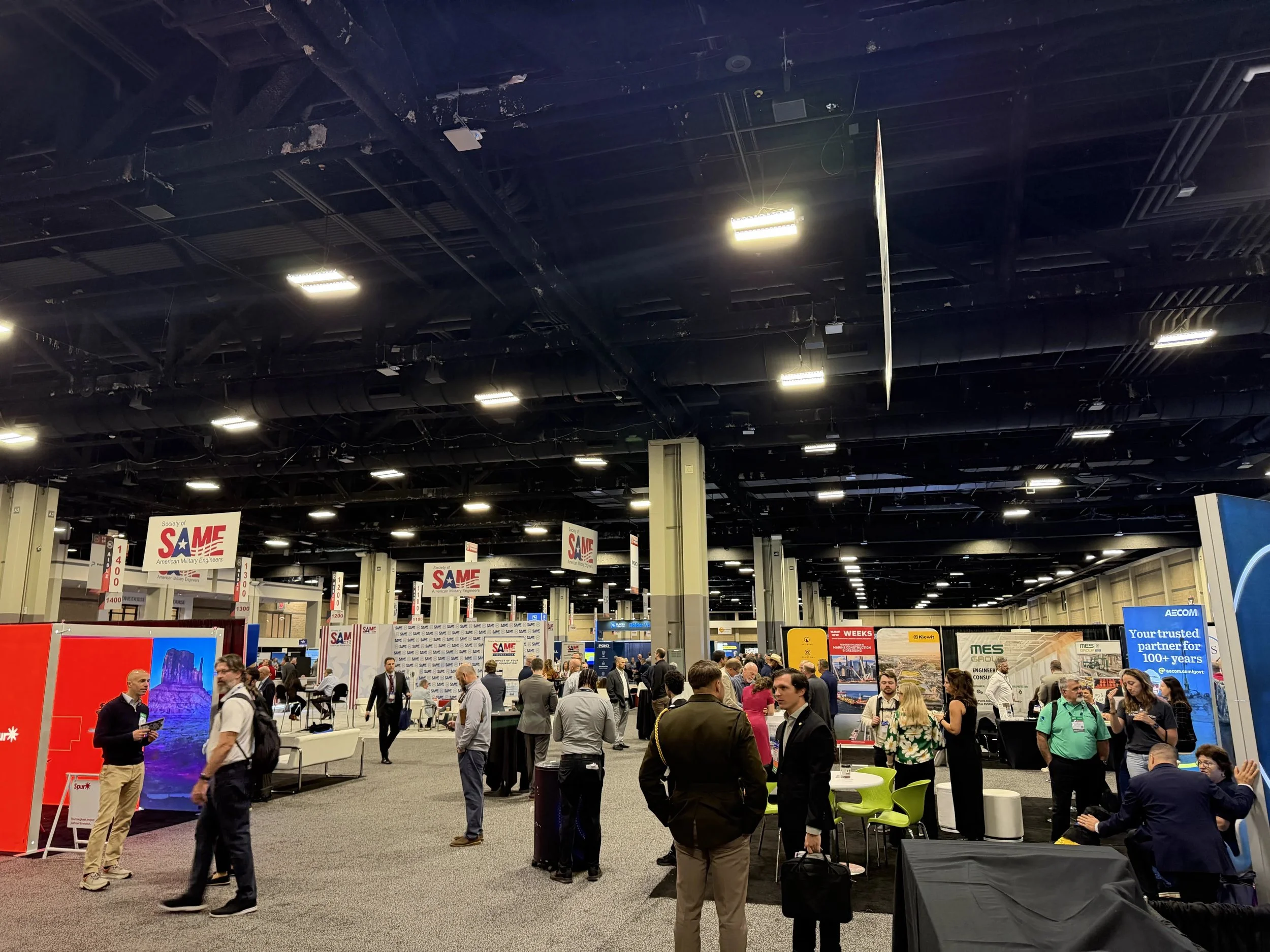
From November 4 through 6, the Charlotte Convention Center filled up with the people who design and build the country’s bases, runways, levees and federal facilities. The Society of American Military Engineers hosted its 2026 Federal Small Business Conference for the A/E/C Industry there, and if last year is any guide, the crowd was big. SBC 2025 drew more than 5,100 professionals, according to SAME.
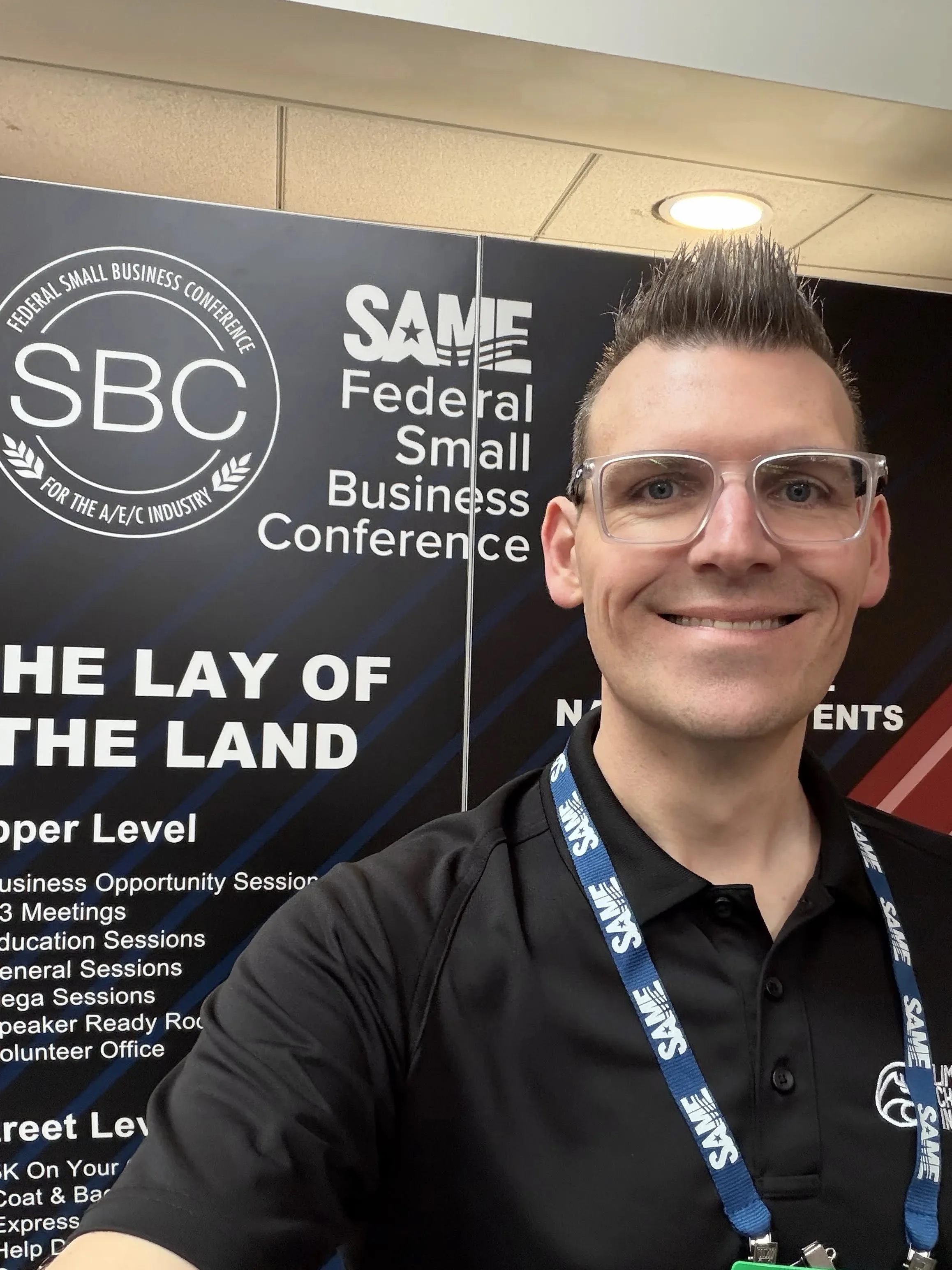
Seth Waters, who leads strategic partnerships for Lima Charlie Inc., spent the week in those halls. Most of his conversations circled back to a line item that rarely makes it into a capture plan but can stall a project within its first month: construction crew lodging.
The Numbers Behind the Room
The conference sits on top of a very large market. In June, the U.S. Small Business Administration released its FY25 scorecard. Small businesses won nearly 28 percent of all federal prime contract dollars, about $179 billion, well above the 23 percent statutory goal. Add subcontracts and the total climbs to roughly $273 billion. SBA estimates subcontracting alone supported about 418,000 jobs.
Service-disabled veteran-owned small businesses took in $32.5 billion in prime contracts, beating the 5 percent government-wide goal. Federal News Network noted the $179 billion figure was actually down from 2024, which tells you competition for every award is getting tighter.

Behind every one of those dollars is a crew that has to show up somewhere. Superintendents, surveyors, equipment operators, inspectors, engineers on rotation. A lot of that work happens near installations and in places where the hotel options are thin. Some of these projects run for a few weeks. Others run for a year or more, with people rotating in and out the whole time, and the lodging plan has to keep up with both.
Where Crew Lodging Goes Sideways
Primes and their subs know the story. A project mobilizes near a base or a remote levee segment. The nearest hotels are full, or they won’t hold a block of 20 rooms for six months. Crews end up scattered across three properties and a 45-minute commute, eating every meal out and burning through per diem. Then the schedule slips by eight weeks and somebody has to renegotiate everything.
A crew that sleeps badly and drives an hour each way will show it on the job site.
What tends to work better is furnished, extended-stay lodging close to the site, with full kitchens and laundry, on terms that flex with the schedule. One partner sourcing units, one invoice, one phone number that someone actually picks up when a crew lead calls at 10 p.m. on a Sunday.
We’ve written about how this plays out on large private builds, from data center construction to chip plants. Federal work brings the same pressure, plus tighter compliance and reporting.
The Subcontracting Plan Angle Primes Often Miss
Large primes on sizable federal contracts generally have to submit small business subcontracting plans, with goals for categories that include service-disabled veteran-owned firms. How well a prime meets those goals can show up later in its past performance record.
Depending on how a prime structures its plan and reports its spend, lodging bought from a certified SDVOSB may count toward those small business and SDVOSB numbers. Your small business liaison officer or contracts team will know the specifics for each contract. It’s worth the conversation. Crew lodging is a real, recurring expense, and routing it through a qualified small business can help on two fronts at once.
Questions to Ask a Crew Lodging Partner
Before a project mobilizes, it helps to get straight answers to a few things.
Can they place a full crew within a reasonable drive of the job site, including near installations and in smaller markets? Will the units come furnished with real kitchens, so per diem goes further? Can lease terms stretch or shrink when the schedule changes, without penalties that eat the margin? Is billing consolidated, so your project accountant isn’t reconciling twelve folios a month? And who answers the phone after hours?
If a vendor hesitates on any of those, keep looking.
Built to Be the Easy Part of Mobilization
Lima Charlie Inc. is a service-disabled veteran-owned small business, and we help primes and subcontractors house project crews, field teams and rotating staff close to the work. We handle sourcing, setup and support so your project managers can stay focused on the build. Learn more about our corporate lodging programs.
Our team has placed more than 37,000 households across 12+ states and territories, and we run live 24/7 staffing, so there’s always a person on the other end of the line.
Thank you to SAME and to everyone who took time to talk with Seth in Charlotte. If you’ve got a project mobilizing in the next few months, let’s talk about where your crew is going to sleep.
📞 Call (888) 418-4773 or send us a note. A real person answers every time.